Training Courses 2026/2027 in San Diego, CA
The maximum number of participants is limited to 10.
SIPARI® I 13/14th November 2026
SIPARI® II
12/13th March 2027
SIPARI® III starting in March 2027
(in the respective institution of the participants)
SIPARI® IV 10/11th September 2027
Fees: SIPARI® I - IV per course:
1.350,-US$
Supervision course:
1.550,-US$
If you are interested in further information please contact:
Jungblut,
M.
&
Aldridge,
D.
(2004):
Musik
als
Brücke
zur
Sprache
–
die
musiktherapeutische
Behandlungsmethode
“SIPARI®“
bei
Langzeitaphasikern. Neurologie & Rehabilitation, 10 (2): 69-78.
Jungblut,
M.
(2005):
Music
therapy
for
people
with
chronic
aphasia:
a
controlled
study.
In:
Aldridge,
D.
(Ed.):
Music
therapy
and
neurological rehabilitation. Performing health. Jessica Kingsley Publishers, London and Philadelphia, 189-211.
Jungblut,
M.
Gerhard,
H.
&
Aldridge,
D.
(2006):
Die
Wirkung
einer
spezifischen
musiktherapeutischen
Behandlung
auf
die
sprachlichen
Leistungen eines chronisch kranken Globalaphasikers – eine Falldarstellung. Neurologie & Rehabilitation 12 (6), 339-347.
Jungblut,
M.,
Suchanek,
M.,
Gerhard,
H.
(2009):
Long-term
recovery
from
chronic
Global
aphasia:
a
case
report.
Music
&
Medicine,
Vol.
1,
No. 1, 61-69.
Jungblut,
M.
(2009):
SIPARI®:
a
music
therapy
intervention
for
patients
suffering
with
chronic,
nonfluent
aphasia.
Music
&
Medicine,
Vol.
1, No. 2., 102-105 .
Jungblut,
M.,
Huber,
W.,
Pustelniak,
M.,
Schnitker,
R.,
M.
(2009):
The
neural
substrates
of
chanted
vowel
changes
in
rhythm
sequences.
NeuroImage, 47 (1): S119.
Jungblut, M. (2010): SIPARI® Musikunterstützte Sprachanbahnung bei chronischer Aphasie. Aphasie und verwandte Gebiete, 1, 69-79.
Jungblut,
M.,
Huber,
W.,
Pustelniak,
M.,
Schnitker,
R.
(2011):
Neuronale
Korrelate
rhythmischer
Strukturen
beim
Singen
-
eine
fMRT-
Studie. Neurologie & Rehabilitation, 17 (1): 33-39.
Jungblut,
M.,
Huber,
W.,
Pustelniak,
M.
and
Schnitker,
R.
(2012):
The
impact
of
rhythm
complexity
on
brain
activation
during
simple
singing - an event-related fMRI study. Restorative Neurology and Neuroscience, 30 (1): 39-53.
Jungblut,
M.,
Huber,
W.,
Mais,
C.
and
Schnitker,
R.
(2014):
Paving
the
way
for
speech:
Voice-training-induced
plasticity
in
chronic
aphasia
and apraxia of speech - three single cases. Neural Plasicity, Article ID 841982, 14 pages,
http://dx.doi.org/10.1155/2014/841982.
Jungblut,
M.
(2014):
SIPARI®
bei
chronischer
Aphasie
und
Sprechapraxie
–
Was
fMRT-Untersuchungen
zeigen.
Aphasie
und
verwandte
Gebiete,3, 29-36.
Jungblut,
M.,
Huber,
W.,
Schnitker,
R.
(2016):
Rhythm
structure
influences
auditory-motor
interaction
during
anticipatory
listening
to
simple singing. Journal of Speech Pathology & Therapy, 1: 108.
http://dx.doi.org/10.4172/2472-5005.1000108
Jungblut,
M.,
Mais,
C.
Huber,
W.,
Binkofski,
F.C.,
Schüppen,
A.
(2020):
5-year
course
of
therapy-induced
recovery
in
chronic
non-fluent
aphasia - Three single cases – CORTEX, Vol. 132, pp. 147-165.
https://doi.org/10.1016/j.cortex.2020.08.009
Jungblut,
M.,
Mais,
C.,
Binkofski
FC,
Schüppen,
A.
(2022):
The
efficacy
of
a
directed
rhythmic-melodic
voice
training
in
the
treatment
of
chronic non-fluent aphasia—Behavioral and imaging results. Journal of Neurology.
http://dx.doi.org/10.1007/s00415-022-11163-2
Treatment
objectives
using
SIPARI®
include
improving
linguistic,
motor,
and
cognitive
functions
and
thereby
supporting
speech-motor
processes
and
those
speech-
systematic
processes
that
encourage
planning
and
sequencing
performance.
IIn
2010
SIPARI®
was
included
in
the
Cochrane
Review
“Music
therapy
for
acquired
brain
injury”
in
the
category
“communication”
as
the
only
evidence-based
method
ref.:
Bradt
J,
Magee
WL,
Dileo
C,
Wheeler
BL,
McGilloway
E.
Music
therapy
for
acquired
brain
injury.
Cochrane
Database
of
Systematic
Reviews
2010,
Issue
7.
Art.
No.: CD006787. DOI: 10.1002/14651858. CD006787.pub2.
SIPARI® II:
will
impart
theoretical
knowledge
on
the
six
components
of
the
treatment
method
taking
account
of
neuropsychological
as
well
as
psychotherapeutical
aspects.
There
will
also
be
a
self-
awareness
part
and
detailed
practical
demonstration
of
the
different
components
of
the
SIPARI®
method,
thus
preparing
the
participants for practical work with the patients.
SIPARI® III:
will
concentrate
on
supervised
practical
6
months’
work
with
aphasia
patients
at
the
participant’s
institution,
a
period
where
the
participants
will
gather
experience
with
the
use
of
the
SIPARI®
method,
submit
reports
regularly
as
well
as
video
sequences
of
their
work
to
the
trainer
and
get
feedback.
The
fee
for this course includes supervision by Dr. Jungblut.
SIPARI® IV:
will
constitute
the
final
qualification
and
certification
course,
which
consists
of
a
theoretical
and
practical
examination
(written
test
and
oral
case
description
illustrated
by
video
material
showing
the
application
of
the
methodological
principles
of
the
SIPARI®
treatment).
After
successful
completion
of
the
course,
a
certificate
will
be
given
with
the
permission
to
independently apply the method for a period of 3 years.
Supervision courses:
in
order
to
assure
quality
control,
supervision
courses
are
offered
for
recertification
at
regular
intervals,
which
after
successful
completion
will
allow
the
participants
to
continue
their
work
with
SIPARI®
for
another
3
years.
These
3-day
courses
will
update
the
knowledge
of
the
participants
and
improve
their
treatment repertoire.
Training


S I P A R I ®
evidence-based music-supported therapy
for patients suffering from chronic aphasia
Evidence-based music-supported therapy
for chronic aphasia patients
The Institute for Interdisciplinary Music- and Speech-Therapy offers trainings for a maximum of 100 therapists in the USA till 2025 in San Diego, CA. These trainings will be conducted by Dr. Monika Jungblut. This page addresses those, who are interested in getting trained in the SIPARI®-method. The method is a directed music-supported treatment approach developed to improve language and speech capabilities of patients suffering from chronic aphasia. This method is made up specifically of S inging, I ntonation, P rosody, breathing (German: A tmung), R hythm, and I mprovisation as essential elements.The training
SIPARI® I-IV:aims
at
those
therapists
with
a
deep
knowledge
of
aphasia
working
in
the
field
of
neurological
rehabilitation.
A
prerequisite
for
participation
in
this
training
is
a
postgraduate
study
in
the
fields
of
music
therapy,
logopedics
or
linguistics
followed
by
a
minimum
of
3
years
of
therapeutical
occupation
with
aphasia
patients.
An
additional
requirement
for
participation
is
the
knowledge
of
relevant
clinical
basics
of
aphasia
and
speech
perception,
syndrome
classification,
aetiology,
epidemiology,
pathogenesis
as
well
as
concomitant
symptoms.
The
training
is
structured
in
4
parts
starting
with
two
2-day
workshops
followed
by
practical
work
with
patients
for
6
months
supervised
by
Dr.
Jungblut and the final 2-day examination course.
The Institute for Interdisciplinary Music- and Speech-Therapy ensures that the number of licensed SIPARI® therapists in the USA will be limited to a maximum of 100 therapists till 2030.The training is structured as follows
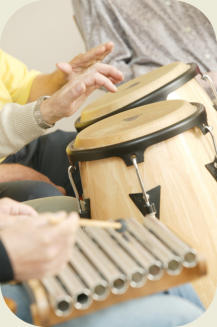
SIPARI® I: will introduce to the resource-oriented and training-centred treatment concept. Basic theoretical fundamentals will be explained and the parallels of speech- and music-perception will be demonstrated. As an essential part of the course, participants get to know musical effectiveness by playing instruments themselves or using their own voice. Musical education is not an obligatory requirement. However, participants should be willing to let themselves in for contact with music actively and open-minded. Furthermore, practical work with patients on the basis of specific training situations will be demonstrated in order to give an insight into the treatment repertoire.
2026 © Dr. Jungblut
Disclaimer
The
SIPARI®
therapy
was
developed
by
Dr.
Jungblut
and
is
applied
exclusively
by
trained
and
certified
therapists
or
Dr.
Jungblut
herself.
Those,
who
are
interested
in
this
treatment
should
check
that
the
providing therapist successfully completed the SIPARI® trainings.



S I P A R I ®
evidence-based music-supported therapy
for patients suffering from chronic aphasia
Training
Training Courses 2026/2027 in San Diego, CA
The maximum number of participants is limited to 10.
SIPARI® I 13/14th November 2026
SIPARI® II
12/13th March 2027
SIPARI® III starting in March 2027
(in
the
respective
institution
of
the
participants)
SIPARI® IV 10/11th September 2027
Fees: SIPARI® I - IV per course:
1.350,-US$
Supervision course:
1.550,-US$
If you are interested in further information please
contact:


Evidence-based music-supported therapy
for chronic aphasia patients
The Institute for Interdisciplinary Music- and Speech-Therapy offers trainings for a maximum of 100 therapists in the USA till 2025 in San Diego, CA. These trainings will be conducted by Dr. Monika Jungblut. This page addresses those, who are interested in getting trained in the SIPARI®-method. The method is a directed music-supported treatment approach developed to improve language and speech capabilities of patients suffering from chronic aphasia. This method is made up specifically of S inging, I ntonation, P rosody, breathing (German: A tmung), R hythm, and I mprovisation as essential elements.
Treatment
objectives
using
SIPARI®
include
improving
linguistic,
motor,
and
cognitive
functions
and
thereby
supporting
speech-motor
processes
and
those
speech-
systematic
processes
that
encourage
planning
and
sequencing
performance.
IIn
2010
SIPARI®
was
included
in
the
Cochrane
Review
“Music
therapy
for
acquired
brain
injury”
in
the
category
“communication”
as
the
only
evidence-based
method
ref.:
Bradt
J,
Magee
WL,
Dileo
C,
Wheeler
BL,
McGilloway
E.
Music
therapy
for
acquired
brain
injury.
Cochrane
Database
of
Systematic
Reviews
2010,
Issue
7.
Art.
No.: CD006787. DOI: 10.1002/14651858. CD006787.pub2.
Jungblut,
M.
&
Aldridge,
D.
(2004):
Musik
als
Brücke
zur
Sprache
–
die
musiktherapeutische
Behandlungsmethode
“SIPARI®“
bei
Langzeitaphasikern. Neurologie & Rehabilitation, 10 (2): 69-78.
Jungblut,
M.
(2005):
Music
therapy
for
people
with
chronic
aphasia:
a
controlled
study.
In:
Aldridge,
D.
(Ed.):
Music
therapy
and
neurological
rehabilitation.
Performing
health.
Jessica
Kingsley
Publishers,
London
and
Philadelphia,
189-211.
Jungblut,
M.
Gerhard,
H.
&
Aldridge,
D.
(2006):
Die
Wirkung
einer
spezifischen
musiktherapeutischen
Behandlung
auf
die
sprachlichen
Leistungen
eines
chronisch
kranken
Globalaphasikers
–
eine
Falldarstellung.
Neurologie
&
Rehabilitation 12 (6), 339-347.
Jungblut,
M.,
Suchanek,
M.,
Gerhard,
H.
(2009):
Long-term
recovery
from
chronic
Global
aphasia:
a
case
report.
Music
&
Medicine,
Vol.
1,
No.
1,
61-
69.
Jungblut,
M.
(2009):
SIPARI®:
a
music
therapy
intervention
for
patients
suffering with chronic, nonfluent aphasia. Music & Medicine, Vol. 1, No. 2.,
102-105 .
Jungblut,
M.,
Huber,
W.,
Pustelniak,
M.,
Schnitker,
R.,
M.
(2009):
The
neural
substrates
of
chanted
vowel
changes
in
rhythm
sequences.
NeuroImage,
47 (1): S119.
Jungblut,
M.
(2010):
SIPARI®
Musikunterstützte
Sprachanbahnung
bei
chronischer Aphasie. Aphasie und verwandte Gebiete, 1, 69-79.
Jungblut,
M.,
Huber,
W.,
Pustelniak,
M.,
Schnitker,
R.
(2011):
Neuronale
Korrelate
rhythmischer
Strukturen
beim
Singen
-
eine
fMRT-Studie.
Neurologie & Rehabilitation, 17 (1): 33-39.
Jungblut,
M.,
Huber,
W.,
Pustelniak,
M.
and
Schnitker,
R.
(2012):
The
impact
of
rhythm
complexity
on
brain
activation
during
simple
singing
-
an
event-
related
fMRI
study.
Restorative
Neurology
and
Neuroscience,
30
(1):
39-
53.
Jungblut,
M.,
Huber,
W.,
Mais,
C.
and
Schnitker,
R.
(2014):
Paving
the
way
for
speech:
Voice-training-induced
plasticity
in
chronic
aphasia
and
apraxia
of
speech
-
three
single
cases.
Neural
Plasicity,
Article
ID
841982,
14
pages,
http://dx.doi.org/10.1155/2014/841982.
Jungblut,
M.
(2014):
SIPARI®
bei
chronischer
Aphasie
und
Sprechapraxie
–
Was
fMRT-Untersuchungen zeigen. Aphasie und verwandte Gebiete,3, 29-36.
Jungblut,
M.,
Huber,
W.,
Schnitker,
R.
(2016):
Rhythm
structure
influences
auditory-motor
interaction
during
anticipatory
listening
to
simple
singing.
Journal
of
Speech
Pathology
&
Therapy,
1:
108.
http://dx.doi.org/10.4172/2472-5005.1000108
Jungblut,
M.,
Mais,
C.
Huber,
W.,
Binkofski,
F.C.,
Schüppen,
A.
(2020):
5-year
course
of
therapy-induced
recovery
in
chronic
non-fluent
aphasia
-
Three
single
cases
–
CORTEX,
Vol.
132,
pp.
147-165.
https://doi.org/10.1016/j.cortex.2020.08.009
Jungblut,
M.,
Mais,
C.,
Binkofski
FC,
Schüppen,
A.
(2022):
The
efficacy
of
a
directed
rhythmic-melodic
voice
training
in
the
treatment
of
chronic
non-
fluent
aphasia—Behavioral
and
imaging
results.
Journal
of
Neurology.
http://dx.doi.org/10.1007/s00415-022-11163-2
The training
SIPARI® I-IV:aims
at
those
therapists
with
a
deep
knowledge
of
aphasia
working
in
the
field
of
neurological
rehabilitation.
A
prerequisite
for
participation
in
this
training
is
a
postgraduate
study
in
the
fields
of
music
therapy,
logopedics
or
linguistics
followed
by
a
minimum
of
3
years
of
therapeutical
occupation
with
aphasia
patients.
An
additional
requirement
for
participation
is
the
knowledge
of
relevant
clinical
basics
of
aphasia
and
speech
perception,
syndrome
classification,
aetiology,
epidemiology,
pathogenesis
as
well
as
concomitant
symptoms.
The
training
is
structured
in
4
parts
starting
with
two
2-day
workshops
followed
by
practical
work
with
patients
for
6
months
supervised
by
Dr.
Jungblut
and
the
final
2-day
examination course.
The Institute for Interdisciplinary Music- and Speech- Therapy ensures that the number of licensed SIPARI® therapists in the USA will be limited to a maximum of 100 therapists till 2030.The training is structured as follows
SIPARI® I: will introduce to the resource-oriented and training-centred treatment concept. Basic theoretical fundamentals will be explained and the parallels of speech- and music-perception will be demonstrated. As an essential part of the course, participants get to know musical effectiveness by playing instruments themselves or using their own voice. Musical education is not an obligatory requirement. However, participants should be willing to let themselves in for contact with music actively and open- minded. Furthermore, practical work with patients on the basis of specific training situations will be demonstrated in order to give an insight into the treatment repertoire.
SIPARI® II:
will
impart
theoretical
knowledge
on
the
six
components
of
the
treatment
method
taking
account
of
neuropsychological
as
well
as
psychotherapeutical
aspects.
There
will
also
be
a
self-
awareness
part
and
detailed
practical
demonstration
of
the
different
components
of
the
SIPARI®
method,
thus
preparing
the
participants for practical work with the patients.
SIPARI® III:
will
concentrate
on
supervised
practical
6
months’
work
with
aphasia
patients
at
the
participant’s
institution,
a
period
where
the
participants
will
gather
experience
with
the
use
of
the
SIPARI®
method,
submit
reports
regularly
as
well
as
video
sequences
of
their
work
to
the
trainer
and
get
feedback.
The
fee
for this course includes supervision by Dr. Jungblut.
SIPARI® IV:
will
constitute
the
final
qualification
and
certification
course,
which
consists
of
a
theoretical
and
practical
examination
(written
test
and
oral
case
description
illustrated
by
video
material
showing
the
application
of
the
methodological
principles
of
the
SIPARI®
treatment).
After
successful
completion
of
the
course,
a
certificate
will
be
given
with
the
permission
to
independently apply the method for a period of 3 years.
Supervision courses:
in
order
to
assure
quality
control,
supervision
courses
are
offered
for
recertification
at
regular
intervals,
which
after
successful
completion
will
allow
the
participants
to
continue
their
work
with
SIPARI®
for
another
3
years.
These
3-day
courses
will
update
the
knowledge
of
the
participants
and
improve
their
treatment repertoire.

2026 © Dr. Jungblut
Disclaimer